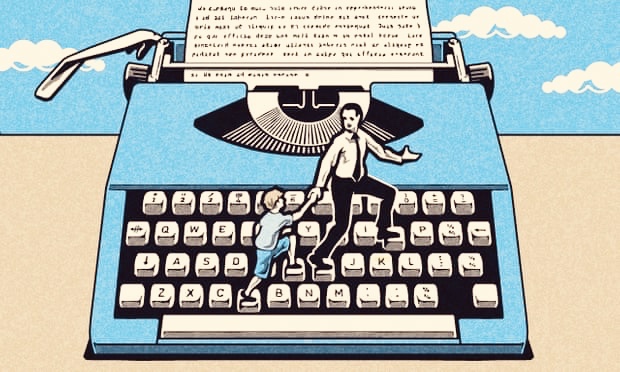
The debasement of the editorial and op-ed page of newspapers, by turning them into the plaything of maaliks and marketing mavens, is a work in rapid progress. Hindustan Times and The Indian Express run signed advertisements by Uttar Pradesh chief minister Yogi Adityanath—an extension of the jacket ad flanking their front pages, to mark his…
Page 1 to Page 12: What newspaper coverage of the death by suicide of a sitting BJP MP reveals
As the old saying goes, once is happenstance, twice is coincidence, thrice is enemy action. Or, as we say in journalism, a trend. In the space of just 20 days, two Members of Parliament have been found dead. The first, 7-time MP Mohan Delkar, was found hanging in his hotel room in Bombay in February.…
How the Marathi daily ‘Prahaar’, owned by M/s Narayan Rane & Sons, proves a ‘New Yorker’ writer right, every single morning
The legendary New Yorker writer A.J. Liebling is credited with the aphorism that “the freedom of the press belongs to those who own one”. Meaning: he who pays the printer calls the shots. The Marathi newspaper Prahaar underlines the truth of that observation like no other. *** The 8-page Prahaar, published from Mumbai, Thane and…
Press Council of India invites applications for its 14th term
The Press Council of India (PCI), is inviting applications for the 14th Council with an amended set of rules. Advertisements inviting claims have appeared in at least 18 newspapers across the country. The Press Council is a quasi-judicial body that comprises 28 members, and a chairman, usually a retired Supreme Court judge. The current chairman…
‘The Telegraph’ sports journalist who is now the Chief Justice of Madras High Court
Madras High Court has a new Chief Justice, its 42nd: Justice Sanjib Banerjee. Nothing new there, all high courts have a first among equals. The interesting part comes through two tweets by The Hindu’s legal correspondent, Mohamed Imranullah, who reveals that Justice Banerjee, 60, began his career as a sports journalist with The Telegraph in…
Simple: Presbyterians (7,6)
Crossword puzzles with big prizes were a big draw for newspapers and magazines in the time before the internet. The Illustrated Weekly of India, among others, ran giant puzzles to keep readers and subscribers hooked, and its wordsmith Raju Bharatan had quite a reputation setting it. As The Times of India dumbed down in the…
Dr R. Krishnamurthy, the scholar and owner-editor of ‘Dina Malar’, who simplified the Tamil script, departs at 88
Dr R. Krishnamurthy, the former Editor of the Tamil daily newspaper Dina Malar, has passed on, aged 88. A full-page obituary adorns the front page of the paper in today’s issue. Dr Krishnamurthy was its Editor for 40 years. *** Dr Krishnamurthy was also a renowned epigraphist, as an obituary in The Times of India…
“Perverted, grotesque”: An illustration in a TOI edit page piece that got the Russian ambassador’s humourless goat
An edit page piece in The Times of India by the paper’s edit page editor Swagato Ganguly has got the Russians—or at least their representative in India—all riled up. The piece, “Does soft power matter?“, built on the YouTube video released by Vladimir Putin‘s bugbear Alexei Navalny, has led to a loud protest by Russia’s…
Chandan Mitra became owner of ‘The Pioneer’ without spending a rupee. The group is now in financial trouble.
In its hey day, The Pioneer counted Rudyard Kipling, Winston Churchill and Harivanshrai Bachchan among its star correspondents. But 155 years after it rolled off the press in Lucknow, the newspaper has run into serious financial trouble, with insolvency proceedings being launched against its publishing company CMYK Printech. *** Purchased by the Thapar Group in…
Barring ‘Indian Express’ and ‘Telegraph’, few newspapers ask why an orderly farmers’ protest suddenly went awry
The farmers’ protests in Delhi against new farm laws sneaked in through Parliament, with former ‘Prabhat Khabar‘ editor Harivansh playing a questionable part as Rajya Sabha deputy chair, had been mostly peaceful and exemplary for 66 days. But the “tractor parade” by the farmers on Republic Day, with protesters breaching pre-agreed conditions and “storming” Red…
“De-marketing”: An almost 100% increase in cover price of ‘Mint’ in Bangalore
A ridiculously low cover price was one of key reasons for Indian newspapers to feel the COVID pinch more than their western counterparts. With advertising dead during the lockdown, circulation revenue too dried up, as the perils of chasing the lowest common denominator became clear. Even after the lockdown was lifted, major newspaper groups, sitting…
#SuperhitGhotala: Arnab Goswami’s 80 MB of WhatsApp chats in 12 tweets, 7 screenshots and 2 YouTube videos
“He who lives by other people’s WhatsApp chats shall be judged by his own WhatsApp chats.”—old jungle saying *** For weeks, after the death of Sushant Singh Rajput, India’s TV news channels feasted on crumbs fed to them—leaked transcripts of WhatsApp conversations of stars and upstarts, hinting darkly at murder, extortion, drugs and sex, all in the run-up to the assembly elections due in…
Kamal Morarka, the politician who launched a newspaper, passes away
Kamal Morarka, the politician and businessman, who co-founded the now-defunct Bombay tabloid newspaper The Afternoon Despatch & Courier, has passed away at age 74. Morarka, a former minister in the Chandrashekhar ministry, helped Behram “Busybee” Contractor to launch ADC at short notice after the latter had walked away from the Evening News of India of…
Vague, arbitrary, unconstitutional, outdated: 9 reasons why journalists should want Section 2(c)(i) of the Contempt of Courts Act to go
The constitutional validity of the Contempt of Courts Act, 1971, has been challenged in the Karnataka High Court by Krishna Prasad, former Editor-in-Chief of Outlook; N. Ram, former Editor-in-Chief of The Hindu and director of The Hindu Publishing Group; Arun Shourie, former Editor of The Indian Express and former Union minister; and Prashant Bhushan, senior…
What’s public about a private treaty? Times Group has Rs 69 crore stake in gaming platform MPL, the Indian cricket team’s kit sponsor
Conflict of interest is the zeitgeist, the spirit of the time. The official kit sponsor of the Indian cricket team is MPL: Mobile Premier League, ostensibly a fantasy game. And MPL’s unashamed brand ambassador is the team’s captain Virat Kohli. The Indian Express reveals today that Kohli has been allotted debentures worth Rs 33.32 lakh…
How Prabhu Chawla, Raj Chengappa and Sachin Kalbag are setting the “bar” higher for younger journalists
For the longest time, journalists and physical fitness could never be used in the same sentence except in jest. Long and irregular working hours, fat and oily samosas, slouching at the desk, smoking, drinking and other vices took their toll on the aspirations of the newsroom Adonis. The self-obsessed millennial lot which frequented gyms rather…
A masterclass from a 94-year-old columnist to a “frustrated” BJP factotum masquerading as Governor and insulting India’s democracy on a daily basis
T.J.S. George, the co-founder of Asiaweek magazine, who does a weekly column for The New Indian Express, wrote a piece last week on Kerala governor Arif Mohammed Khan‘s decision to disallow a session of the Kerala legislative assembly to discuss the Centre’s contentious new farm laws. The intro to the column read: “Arif Mohammed Khan…
In Kerala, the state with 100% literacy, a course in schools and colleges to promote digital literacy
Three years ago, government schools in Kerala made headlines for introducing a course on dealing with fake news. Now the state has announced a five-step digital media literacy programme titled Satyameva Jayate. The salient points: What is wrong information? Why does it spread fast? What precautions should be adopted by social media users? How do…
If newspapers had been as clear about farm laws as they are against taxing corporates, Punjab’s farmers could have gone back home a long time ago
The month-long agitation by Punjab’s resolute farmers over the agricultural “reforms”, artfully sneaked through Parliament with former journalist Harivansh (former Editor of Prabhat Khabar) presiding over the Rajya Sabha, has seen the usual divisions in the media. Large sections of the media have been susceptible to official spin, running audio and video transcripts provided by…
How ‘The Washington Post’ remembers Herblock, its legendary cartoonist, every Christmas
On its anniversary each February, the evening newspaper Star of Mysore prints the same editorial it has published on each of its previous 43 anniversaries. Likewise, on Christmas, The Washington Post prints a cartoon by its legendary cartoonist Herb Block aka Herblock. This cartoon was first printed in 1952.
 IJR
IJR 